Wednesday, July 31, 2024

AF2 Commentary: Introduction to Asemics 16 Edition #2 (revised) by De Villo Sloan


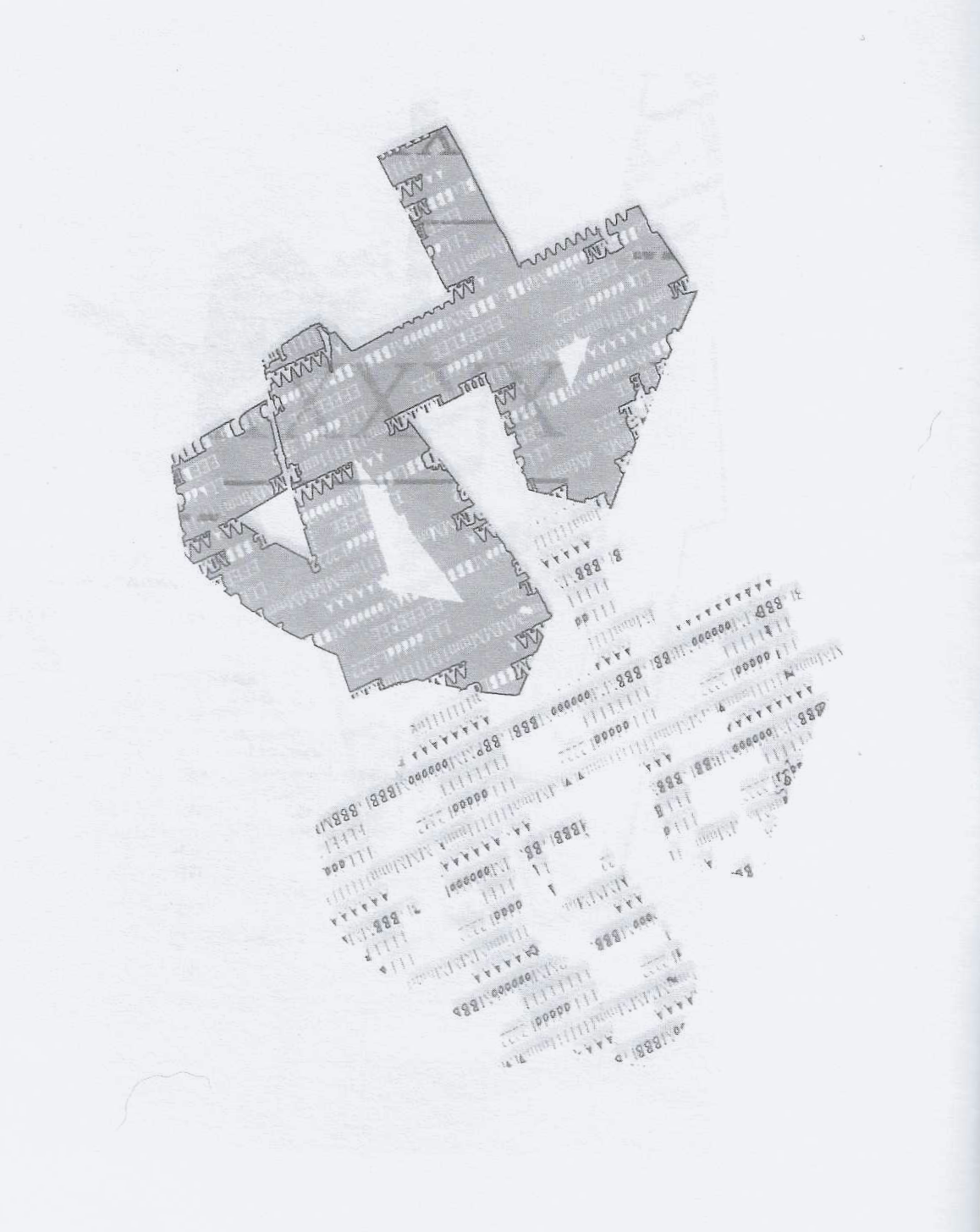
Visual poetry collab by John M. Bennett (Ohio, USA) 
& De Villo Sloan (NY, USA)
Asemic Front Archive


                         Asemics 16 Collaborative Mail-Art Book Project


                                              Introduction to Edition #2


                                                       By De Villo Sloan


In this second edition of the Asemics 16 mail-art project, you will find remarkable work by artists from around the world who have shared their talents and ideas to explore and expand the esoteric and fascinating practice of asemic writing.

We were very fortunate to benefit from the involvement of highly regarded artists and writers who work on the borderland where text and image meld. I offer special thanks to John M. Bennett and Cecil Touchon.

Asemics 16 is made even more unique because it also attracted artists producing highly innovative work in areas including painting, collage, photography and conceptual art. They brought tremendous excitement and enthusiasm. Their work opens vast possibilities for the future as we enter an era where traditional notions of poetry, fiction, and the text are reframed around the concept of post-literature.

The realm of asemic writing includes the invention of de-semanticized texts with corresponding symbols and systems for their arrangement. Asemic writing might at times reveal traces of known language but ultimately cannot be read as any existing language or extinct language that has been recorded.

The Asemics 16 book project was launched in May 2011 by South African artist Cheryl Penn. As the result of her study of U.S. artist Ray Johnson, Penn has led a number of highly successful book projects through the global mail-art network. The International Union of Mail-Artists (IUOMA), founded by Ruud Janssen of the Netherlands, served as an ideal headquarters in cyberspace for an effort that required extensive coordination and communication.

One beneficial aspect of the project made possible through IUOMA was group discussions that preceded individual work on chapters (and later sharing drafts). These included forming a consensus definition of asemic writing where participants explored topics including the relationship of found and natural objects to asemic writing; the relationship of asemic writing to visual poetry and concrete poetry as well as haptic and object poetry; and applications of cultural theory to illuminate practice. Examples of work by earlier authors and artists were discussed, in particular Cy Twombly, Mirtha Dermisache, Henri Michaux, and the collaborative work of Brion Gysin and William S. Burroughs.

This second edition is rich in approaches to creating asemic writing. You will see beautiful and highly expressive cursive script where letters, words and phrases emerge, mirage-like – hinting at a message to the reader – only to fade elusively back into incomprehension and fragmented shapes that rise and fall from the unconscious.

Other artists take a material approach, fragmenting the existing letters into new symbols and syntax. Many of the artists have focused on placing their asemic work in relationship with other images, often creating a narrative context and inventing various hybrid visual-textual forms.

In the pages ahead is a dialog about the nature of language and the human experience by artists from an incredible array of cultures and perspectives. I invite you to delve deeply and enjoy their tremendous contributions.


De Villo Sloan

August 10, 2011

Auburn, New York

(revised 7.30.2024)


AF2 Commentary: Introduction to Asemics 16 Edition #1 (revised) by De Villo Sloan


Collab by Cheryl Penn (South Africa) 
& Rosaire Appel (USA)
Asemic Front Archive


                     Asemics 16 Collaborative Mail-Art Book Project


                                Introduction to Edition #1


                                                       By De Villo Sloan


The global mail-art network, which evolved from art practices in the United States and Europe in the 1960s, has for decades served as a conduit for visual-verbal forms.

Mail-art’s close ties to the Fluxus movement have unquestionably strengthened this connection. Vital work long-nurtured by the network includes concrete poetry, visual poetry, haptic and object poetry as well as the fairly esoteric and fascinating practice of asemic writing.

In May 2011, South African artist Cheryl Penn launched an ambitious collaborative mail-art book project encompassing four editions; this is the first. I have been greatly honored to coordinate the project with her.

The International Union of Mail-Artists (IUOMA), founded by Ruud Janssen of the Netherlands, has served as an ideal headquarters in cyberspace for an effort that involves many artists from around the globe.

Through Asemics 16, Penn has sought to chronicle the work of contemporary asemic writers in the mail-art network, to encourage other artists to explore asemic writing, and to push the boundaries of current practice.

Thus you will find in this edition work by asemic writers who are well-known in the field. You will also find artists who work in collage, painting, photography, and conceptual art, among others. By crossing traditional boundaries they have produced extraordinarily innovative contributions. 

The realm of asemic writing includes the invention of imaginary languages with corresponding symbols and systems for their arrangement. Asemic writing might at times reveal traces of known language but it ultimately cannot be read as any existing language or extinct language that has been recorded.

Through the absence, discontinuity or disruption of conventional signification, new meanings and realizations are made possible. Visual and material elements of written language are brought to the forefront.

Depending upon the approach taken by the individual artists in Asemics 16 – Edition 1, asemic writing can be wondrously simple or intriguingly complex. Some of the artists find inspiration in the scrawling of young children seeking to mimic the writing they have seen but not yet mastered; some delved into personal symbol systems they first created as children themselves.

Other contributors have made asemic signs and syntax from found material and asemic-suggestive shapes in nature. Some have delved into prehistoric glyphs and ancient texts; others have drawn inspiration from street art. The result in Asemics 16 is a vast, global dialog of human expression not constrained by space or language.

 Asemic writing is also a medium that can be illuminated and explained through advanced cultural theory in fields including psychoanalysis, semiotics, linguistics and (important for me) post-structuralism. It addresses deeply philosophical questions involving indeterminacy, incomprehensibility, and meta-language. This edition with all its visual richness brings us together in the shared experience of being human and our relationship to the world.

-sSs-


- De Villo Sloan

August 8, 2011

Auburn, New York, USA 

(revised 7.31.2024)


Tuesday, July 30, 2024

AF2 Commentary: "Deconstructive Asemics" (revised) by De Villo Sloan


By Nancy Bell Scott (Maine, USA). AF2 Archive


DECONSTRUCTIVE ASEMICS


By De Villo Sloan


One prevalent strain in current asemic text creation involves the decomposition of existing texts and alphabets. Written language is rendered “incomprehensible” to create asemic constructs that are unreadable in terms of the conventional process of reading.

The asemic construct is not necessarily devoid of meaning, but the communication process does not occur in the same way as the conventional process that signification creates meaning in reading.

As asemics provide revelations about the nature of language, one contradiction emerges in relation to the notion of asemic unreadability: Asemic constructs are a metaphor for written language; asemics are meta-language because they can only refer to written language but ultimately are not language themselves.

The ghost of language might emerge and disappear in an asemic text. In this instance, we can experience the asemic duality of standing on the borderline between meaning and the incomprehensible. We are witnessing alphabetic symbols evolving into another form of discourse.

The term "deconstruction" here is less a reference to Jacques Derrida's writing and more a reference to the literal, material dismantling and obscuration of texts and symbols.

Methods utilized in deconstructive asemics include distortion, disruption, decay, erasure, various chance operations and/or automatism. Deconstructive asemics and its methods can be viewed as a destructive dismantling of the written word, a metaphor for the decline of the Age of Print and the cultural concept of “literature.”

The work of some asemic writers and artists suggests a revolutionary spirit that includes a program for the obliteration of previous modes of discourse. Alternately, a significant group of other asemicists are creating a deeply meditative asemics that focus on harmony and “reader” engagement with the asemic text; deconstructive asemics appear throughout.

The field of asemic writing and art is relatively new and has sparked global interest. We are in the rare position of witnessing the birth of a cultural mode we do not fully understand.

-sSs-


(Originally published on Asemic Front (1) April 1, 2017; this revision made July 30, 2024)


Saturday, July 27, 2024

Asemic Art by Daidi Hu (Taiwan)


"Hidden in details" (2024) by Daidi Hu (detail study)

(mixed media on canvas)

(Be sure to enlarge. They are beautiful)


"Hidden in details" (2024) by Daidi Hu 

(detail study) (mixed media on canvas)


"Hidden in details" (2024) by Daidi Hu (detail study)

(mixed media on canvas)


"Resurrected passwords after a heavy defeat" (2024) by Daidi Hu 

(detail study) (mixed media on canvas)


"Resurrected passwords after a heavy defeat" (2024) 
                                              
                                                   (Password IV #4) by Daidi Hu 
                                                   
                                                          (mixed media on canvas)


Daidi Hu is an artist and asemic writer 
living in Hualian City, Taiwan. This is her 
first appearance on Asemic Front 2.


Sunday, July 21, 2024

Asemic Front 2 Review: "Light Pours In" by Amy Rodriguez (Anhinga Press Visual Poetry Series)


Light Pours In by Amy Rodriguez. Anhinga Press Visual Poetry Series 2024
Curated by Carol Lynne Knight. Series Editor Kristine Snodgrass


Light Pours In: Poems & Images 

by Amy Rodriguez


Tallahassee: Anhinga Press Visual Poetry Series 


34 pages   5.5 X 8.5 inches   2024


Review by De Villo Sloan


This has been a year of successful launches for the Anhinga Press Visual Poetry Series. For their inaugural chapbook, series editor Kristine Snodgrass selected Light Pours In by emerging artist and visual poet, Amy Rodriquez. Anhinga Co-Director Carol Lynne Knight collaborated with Rodriguez to produce a book of exceptional quality. 

I reviewed Rodriquez’ Asemic Poetica: Volume 1 (2021) with much enthusiasm. Light Pours In, for me, is a continuation of the vision she first presents in Asemic Poetica.

The new book shows maturity and increasing creative skill. In particular, the conventional poems in the book are beautifully crafted lyrics; some of the finest I have seen among current visual poets. 


From Light Pours In by Amy Rodriguez (Anhinga 2024)


In a previous review, I praised the Anhinga vispo editors for providing so much helpful supporting material as a part of the visual poetry series books.

The new visual poetries – rooted in conceptual art and post-structuralist theory among other areas - can seem daunting to those who are attracted but still unsure how to engage with new art and writing. (Actually engaging with avant and postavant art requires no prior knowledge, and contrary to popular opinion: It can be fun as well as a journey into human expression!)

In Light Pours In by Amy Rodriguez, Anhinga Co-Director Carol Lynne Knight shares her experience working with Amy:

“Delicate, energetic, bold – the asemic lines in Amy Rodriquez’ images are assured yet at times wild. While her images use the ‘grammar’ of asemics, the aesthetics are pure and mature, a painterly and spontaneous flow of ink and pen.” I have no better words of my own. My heartfelt congratulations go to Carol and Amy on the completion of this wonderful collaboration.


From Light Pours In by Amy Rodriguez (Anhinga 2024)


Locating trends in the Anhinga Press Visual Poetry Series might be premature. All the same, I will close with an observation involving Amy's Light Pours In and Andrew Brenza's Colorways: both published in the series.

These books use a structure of alternating text-based lyric poems and asemic visual poetry. Placed in the context of the New Concrete Poetry where similar trends can be found, I conclude that the use of Ekphrasis can be a vital tool in the composition of contemporary visual poetry.

Light Pours In by Amy Rodriguez is a significant work by a gifted emerging artist and poet.


(De Villo Sloan is a visual poet and reviewer of post-avant art and literature. He is director of the Winifred and De Villo Sloan, Jr. Charitable Fund.)


Tuesday, July 9, 2024

Asemic Front 2 Review: "Wars" by Angela Caporaso (above/ground press 2024)


Cover of Wars by Angela Caporaso (Caserta, Italy) 
published by above/ground press (Canada 2024)


Wars by Angela Caporaso

above/

        /ground press (2024)

2423 alta vista drive

ottawa, ontario klh 7m9


24 pages (7 x 9 inches)


Review by De Villo Sloan


Visual artist Angela Caporaso (Caserta, Italy) has been exploring visual poetry. Rob McLennan’s above/ground press in Ottawa, Canada, has given us a chapbook of this recent work.

I am set at ease when exploring Wars by the no-frills approach of above/ground press that highlights the work and makes a soft allusion to the gritty, underground visual poetry that took shape in the formerly industrial Great Lakes cities of the USA and Canada.

Caporaso’s emphasis on language materiality, dimensionality and cut-up makes her text an ideal match for McLennan’s editorial eye.    


By Angela Caporaso in Wars


In Wars, Caporaso tells us the visual poems in the edition are inspired by "some short poems by Wystan Hugh Auden." Contemporary visual poets seem to enjoy anchoring their new work to older literary tradition. 

The repetition of cut-up/concrete forms, shifting in constructs of opposing dark and light, suggests to me various configurations of battling armies, military maps. I find myself considering the phenomenon of binary opposition in nature and the human compulsion to warfare. Wars can be read as a visual-linguistic anti-war sequence. The book has much more to offer as well. 


By Angela Caporaso in Wars


Recently John Richard McConnochie, the Australian visual poet and asemic writer, well-known for his diligent admin work at the great Facebook Post-literate group, has been using the term "neo-glyphic" to identify certain asemic forms that he is observing. This brings me to explain why I chose to place my review of Angela's book on Asemic Front2. 

Aspects of asemic writing are merging with the new concrete (or neo-concrete). In Angela Caporaso's War is a series of evolving neo-glyphs that move from binary oppositional structures to pieces that are far more non-binary.

Congratulation to Angela Caporaso and to Rob McLennan for his keen editorial eye recognizing this great book.


(De Villo Sloan is a visual poet and writes about post-avant lit. 
He is director of the Winifred & De Villo Sloan, Jr. Charitable Fund)