Showing posts with label visual poetry collab. Show all posts

Saturday, November 29, 2025

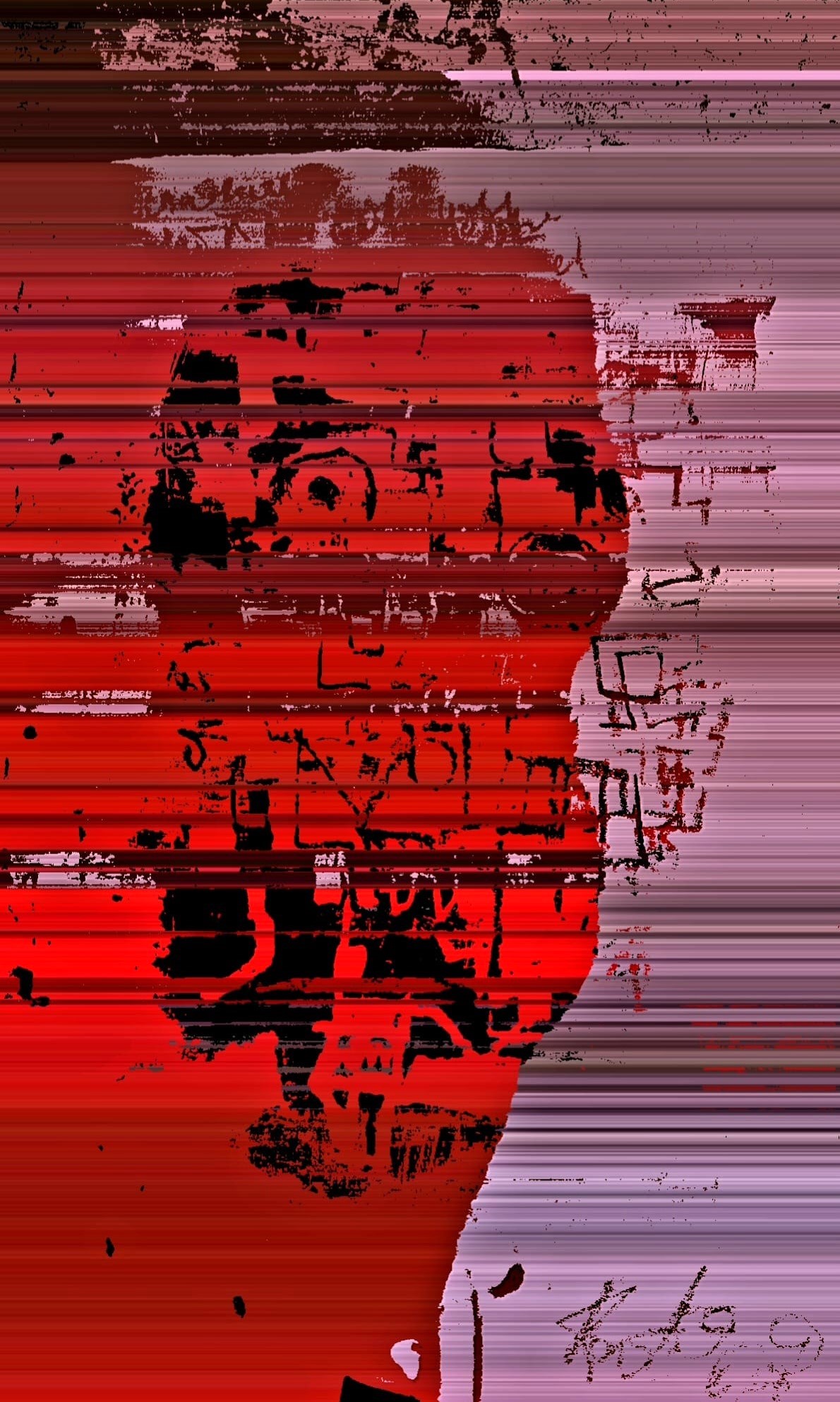
Analysis: Asemic Cartography - Selections from "Mapping Terra Nullius" by John R. McConnochie (Australia)


From Mapping Terra Nullius by John R. McConnochie (Queensland, Australia) 
(November 2025) (Image Courtesy of the Artist)


Asemic Cartography - Selections from Mapping Terra Nullius 
by John R. McConnochie


by De Villo Sloan

Among the many promising sub-genres of asemics evolving globally, I want to spotlight asemic texts rooted in cartography, both its practical and conceptual aspects.

A current master of asemic cartography is Australian visual poet John McConnochie. In this post, I share excerpts from Mapping Terra Nullius, a vispo series McConnochie has published online, although currently uncollected and fragmentary.

I noted in a recent review of digital, AI-assisted asemics by Miekal And that some of the most important asemic work being published today is digital and mutating beyond the classic printed book formula. 


From Mapping Terra Nullius by John McConnochie (October 2025) 
(Image Courtesy of the Artist)


“Terra nullius” is a widely used Latin term translating to, “no one’s land.” McConnochie, an artist whose work often carries distinct ideological messages, makes subtle allusions to European colonization and systemic violations of the rights of indigenous peoples.

For me John McConnochie’s maps reference the Romanticized, pseudo-rational, often confused, attempts to chart and claim the world during the Age of Discovery. Mapping Terra Nullius provides remarkable deconstructions of colonization myths.     


From Mapping Terra Nullius by John McConnochie (October 2025)
(Image Courtesy of the Artist)


Beyond the ideological level of his work, McConnochie explores the unique symbol systems and rules of composition embedded in cartography. Asemics reduce the logic and narratives of cartography into incomprehensible, non-existent worlds. Nameless, enchanted places connect us to the mystery and imagination that is at the root of our fascination with maps.

In previous essays, I have emphasized my belief that visual poetry – including asemic writing – must necessarily incorporate the abstract principles of “textuality” in order to deliver a composition that reaches meaningfully into the poetic realm.  

Maps – as found material and resonant symbol systems – currently serve as inspiration for our innovative visual poets. I encourage you to explore this fascinating area.


-     - De Villo Sloan

November 28, 2025

Elbridge, New York, USA


From Mapping Terra Nullius by John McConnochie
 (October 2025) 
(Image Courtesy of the Artist)


From Mapping Terra Nullius by John McConnochie (September 2025) 
(Image Courtesy of the Artist)


Wednesday, December 11, 2024

mIEKAL aND Collabs with ChatGPT (AI) to Chart 750-page Conceptual Epic (Wisconsin, USA)


By mIEKAL aND (West Lima, Wisconsin, USA) (December 2024) 
(Image courtesy of the artist)


Vispo & AI


Like many other visual and concrete poets, I follow with great interest poets and other experimentalists using tools of artificial intelligence to express their visions and push boundaries. Lanny Quarles' (Texas, USA) AI-assisted work appears regularly on Asemic Front 2. mIEKAL aND recently shared results of his collab with ChatGPT to create a 750-word post avant poem "in the style of mIEKAL aND."

The implications for composition are epoch-changing. Throughout his career, mIEKAL aND has been at the forefront embracing new technologies & concepts. As one of our leading visual poets, he is an ideal guide into the new concrete.

- De Villo Sloan
December 11, 2024


By mIEKAL aND (December 2024) (Image courtesy of the artist)


By mIEKAL aND (December 2024) (Image courtesy of the artist)


By mIEKAL aND (December 2024) (Image courtesy of the artist)


Wednesday, July 31, 2024

AF2 Commentary: Introduction to Asemics 16 Edition # 4 (revised) by De Villo Sloan


Asemic vispo collab by Rebecca Guy Ver (UK) 
& De Villo Sloan (USA) (2018)
(AF2 Archive)


                         Asemics 16 Collaborative Mail-Art Book Project


                           Introduction to Edition #4:  The Mountain of Signs


                                                             By De Villo Sloan


In 1936, Antonin Artaud visited Mexico hoping to find among its indigenous peoples the foundation for a new civilization that would revitalize and replace what he perceived to be the failed cultures of Europe. Artaud made contact with the Tarahumara tribe and in order to reach them had to traverse a desolate region which he named “The Mountain of Signs.”

Artaud’s written account of the difficult journey on horseback contains a remarkable passage where he witnesses the natural rock formations and twisted trees around him transform into marvelous inscriptions, hieroglyphs, fantastic statues depicting myths that he could not read or understand but that suggested vast systems of language chronicling an ancient world alive and energized not by reason but by an alternative source he could only name as magic.

Artaud’s vision of “The Mountain of Signs” is an early and wonderful description of the experience of encountering and creating asemics. It aptly captures the spirit of this fourth edition in the Asemics 16 project, which can fairly be described as artistic magic.

The practice of asemic writing includes the creation of neo-glyphs with corresponding systems for their arrangement. An asemic text might reveal traces of a known language but ultimately cannot be read as any existing language or extinct language that has been recorded. Yet, as the pages ahead reveal, asemic writing is far from being devoid of human expression. Indeed, it succeeds on a global scale where language so often falls short.

Much of the work in this fourth edition tests the boundaries and practices of asemic writing itself as they are currently understood, further validating and extending Artaud’s experience. The artists have found inspiration for their work in all areas of their environments, creating amazing (anti-)symbols and structures. As a result, new directions are presented and possibilities for expression are enlarged.

United by their involvement in the international mail-art network, contributors to this edition are accomplished painters, collage artists, photographers, conceptual artists and visual poets. Applying their considerable talents to asemic writing, they have produced work that is visually stunning and provocative.

While some might seek to secure firm lines between abstract art with asemic elements and asemic texts, the work in edition four – to the contrary – disregards these distinctions between text and image in favor of creating altogether new forms. Thus, as the Asemics 16 project has progressed, the term asemic writing has given way, through a shared consensus, to the concept of asemics, which seems to be far more open and inclusive.  

In their willingness to experiment and explore their imaginations, the contributors to Asemics 16 – Edition #4 open up the possibility of new worlds and new forms of expression.


De Villo Sloan

September 21, 2011

Auburn, New York, USA

(revised July 31, 2024)


AF2 Commentary: Introduction to Asemics 16 Edition #2 (revised) by De Villo Sloan


Visual poetry collab by John M. Bennett (Ohio, USA) 
& De Villo Sloan (NY, USA)
Asemic Front Archive


                         Asemics 16 Collaborative Mail-Art Book Project


                                              Introduction to Edition #2


                                                       By De Villo Sloan


In this second edition of the Asemics 16 mail-art project, you will find remarkable work by artists from around the world who have shared their talents and ideas to explore and expand the esoteric and fascinating practice of asemic writing.

We were very fortunate to benefit from the involvement of highly regarded artists and writers who work on the borderland where text and image meld. I offer special thanks to John M. Bennett and Cecil Touchon.

Asemics 16 is made even more unique because it also attracted artists producing highly innovative work in areas including painting, collage, photography and conceptual art. They brought tremendous excitement and enthusiasm. Their work opens vast possibilities for the future as we enter an era where traditional notions of poetry, fiction, and the text are reframed around the concept of post-literature.

The realm of asemic writing includes the invention of de-semanticized texts with corresponding symbols and systems for their arrangement. Asemic writing might at times reveal traces of known language but ultimately cannot be read as any existing language or extinct language that has been recorded.

The Asemics 16 book project was launched in May 2011 by South African artist Cheryl Penn. As the result of her study of U.S. artist Ray Johnson, Penn has led a number of highly successful book projects through the global mail-art network. The International Union of Mail-Artists (IUOMA), founded by Ruud Janssen of the Netherlands, served as an ideal headquarters in cyberspace for an effort that required extensive coordination and communication.

One beneficial aspect of the project made possible through IUOMA was group discussions that preceded individual work on chapters (and later sharing drafts). These included forming a consensus definition of asemic writing where participants explored topics including the relationship of found and natural objects to asemic writing; the relationship of asemic writing to visual poetry and concrete poetry as well as haptic and object poetry; and applications of cultural theory to illuminate practice. Examples of work by earlier authors and artists were discussed, in particular Cy Twombly, Mirtha Dermisache, Henri Michaux, and the collaborative work of Brion Gysin and William S. Burroughs.

This second edition is rich in approaches to creating asemic writing. You will see beautiful and highly expressive cursive script where letters, words and phrases emerge, mirage-like – hinting at a message to the reader – only to fade elusively back into incomprehension and fragmented shapes that rise and fall from the unconscious.

Other artists take a material approach, fragmenting the existing letters into new symbols and syntax. Many of the artists have focused on placing their asemic work in relationship with other images, often creating a narrative context and inventing various hybrid visual-textual forms.

In the pages ahead is a dialog about the nature of language and the human experience by artists from an incredible array of cultures and perspectives. I invite you to delve deeply and enjoy their tremendous contributions.


De Villo Sloan

August 10, 2011

Auburn, New York

(revised 7.30.2024)


AF2 Commentary: Introduction to Asemics 16 Edition #1 (revised) by De Villo Sloan


Collab by Cheryl Penn (South Africa) 
& Rosaire Appel (USA)
Asemic Front Archive


                     Asemics 16 Collaborative Mail-Art Book Project


                                Introduction to Edition #1


                                                       By De Villo Sloan


The global mail-art network, which evolved from art practices in the United States and Europe in the 1960s, has for decades served as a conduit for visual-verbal forms.

Mail-art’s close ties to the Fluxus movement have unquestionably strengthened this connection. Vital work long-nurtured by the network includes concrete poetry, visual poetry, haptic and object poetry as well as the fairly esoteric and fascinating practice of asemic writing.

In May 2011, South African artist Cheryl Penn launched an ambitious collaborative mail-art book project encompassing four editions; this is the first. I have been greatly honored to coordinate the project with her.

The International Union of Mail-Artists (IUOMA), founded by Ruud Janssen of the Netherlands, has served as an ideal headquarters in cyberspace for an effort that involves many artists from around the globe.

Through Asemics 16, Penn has sought to chronicle the work of contemporary asemic writers in the mail-art network, to encourage other artists to explore asemic writing, and to push the boundaries of current practice.

Thus you will find in this edition work by asemic writers who are well-known in the field. You will also find artists who work in collage, painting, photography, and conceptual art, among others. By crossing traditional boundaries they have produced extraordinarily innovative contributions. 

The realm of asemic writing includes the invention of imaginary languages with corresponding symbols and systems for their arrangement. Asemic writing might at times reveal traces of known language but it ultimately cannot be read as any existing language or extinct language that has been recorded.

Through the absence, discontinuity or disruption of conventional signification, new meanings and realizations are made possible. Visual and material elements of written language are brought to the forefront.

Depending upon the approach taken by the individual artists in Asemics 16 – Edition 1, asemic writing can be wondrously simple or intriguingly complex. Some of the artists find inspiration in the scrawling of young children seeking to mimic the writing they have seen but not yet mastered; some delved into personal symbol systems they first created as children themselves.

Other contributors have made asemic signs and syntax from found material and asemic-suggestive shapes in nature. Some have delved into prehistoric glyphs and ancient texts; others have drawn inspiration from street art. The result in Asemics 16 is a vast, global dialog of human expression not constrained by space or language.

 Asemic writing is also a medium that can be illuminated and explained through advanced cultural theory in fields including psychoanalysis, semiotics, linguistics and (important for me) post-structuralism. It addresses deeply philosophical questions involving indeterminacy, incomprehensibility, and meta-language. This edition with all its visual richness brings us together in the shared experience of being human and our relationship to the world.

-sSs-


- De Villo Sloan

August 8, 2011

Auburn, New York, USA 

(revised 7.31.2024)


Saturday, October 28, 2023

Typed-over & Glitched: Mail Art Collabs by Irene Ronchetti (Argentina) & De Villo Sloan (USA)


Visual poetry collaboration by Irene Ronchetti (Buenos Aires, 
Argentina) & De Villo Sloan (New York, USA)


By Irene Ronchetti (Buenos Aires, Argentina) 
& De Villo Sloan (New York, USA)


By Irene Ronchetti (Buenos Aires, Argentina) 
& De Villo Sloan (New York, USA)


By Irene Ronchetti (Buenos Aires, Argentina) 
& De Villo Sloan (New York, USA)


Source text by Irene Ronchetti (Buenos Aires, Argentina) 


Sunday, December 11, 2022

AI - semic glitched vispo collabs by Kristine Snodgrass (USA) & Kristijonas Lapinskas (France)


Collab by Kristine Snodgrass (Florida, USA) 
& Kristijonas Lapinskas (Lyon, France)


Collab by Kristine Snodgrass 
& Kristijonas Lapinskas


By Kristine Snodgrass & Kristijonas Lapinskas


Collab by Kristine Snodgrass & Kristijonas Lapinskas


By Kristine Snodgrass & Kristijonas Lapinskas


By Kristine Snodgrass & Kristijonas Lapinskas


Collab by Kristine Snodgrass 
& Kristijonas Lapinskas


By Kristine Snodgrass & Kristijonas Lapinskas


By Kristine Snodgrass & Kristijonas Lapinskas