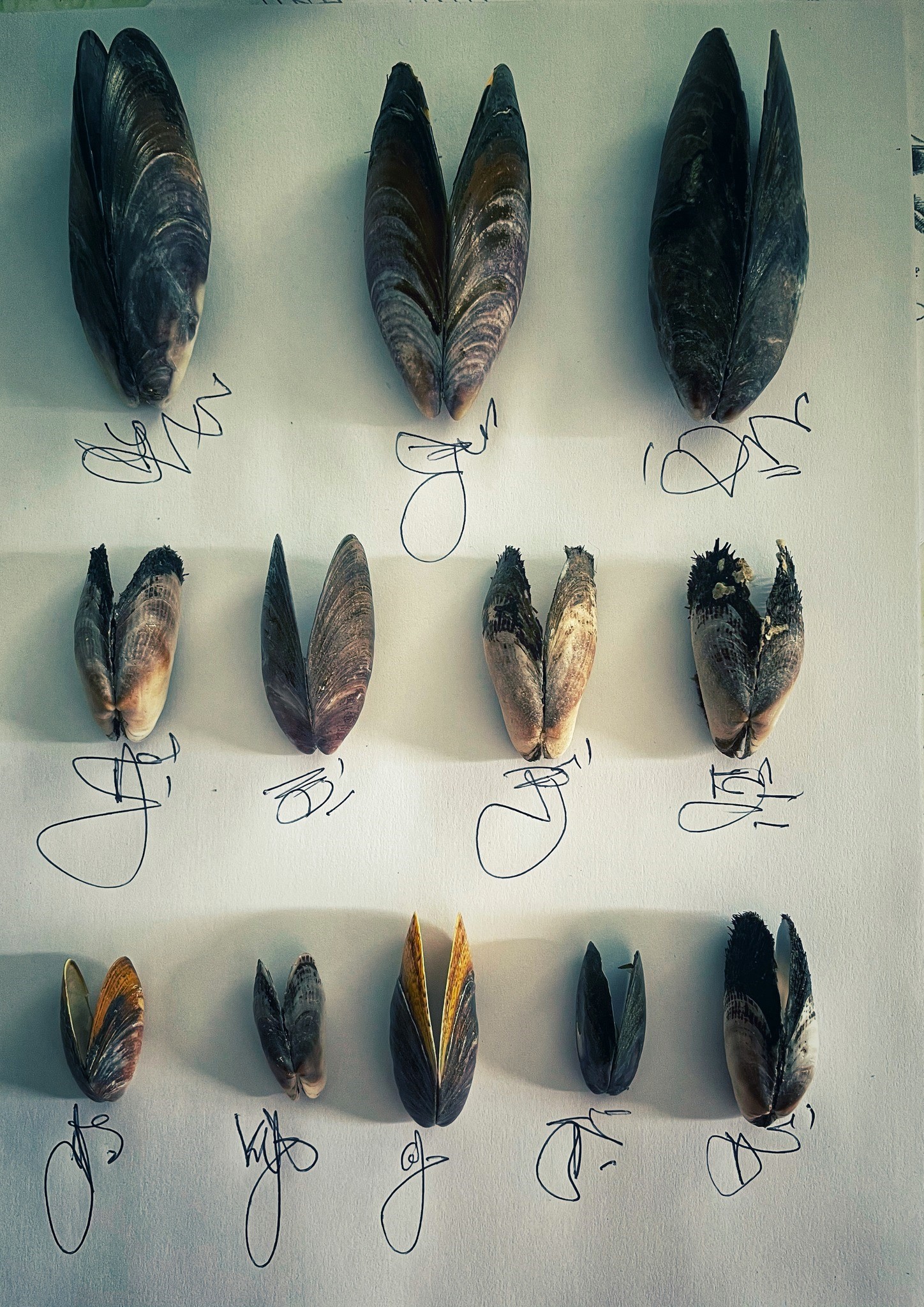
"Study in Linearity" by Kristine Snodgrass (Tallahassee, Florida, USA)


By Kristine Snodgrass

By Kristine Snodgrass

By Kristine Snodgrass


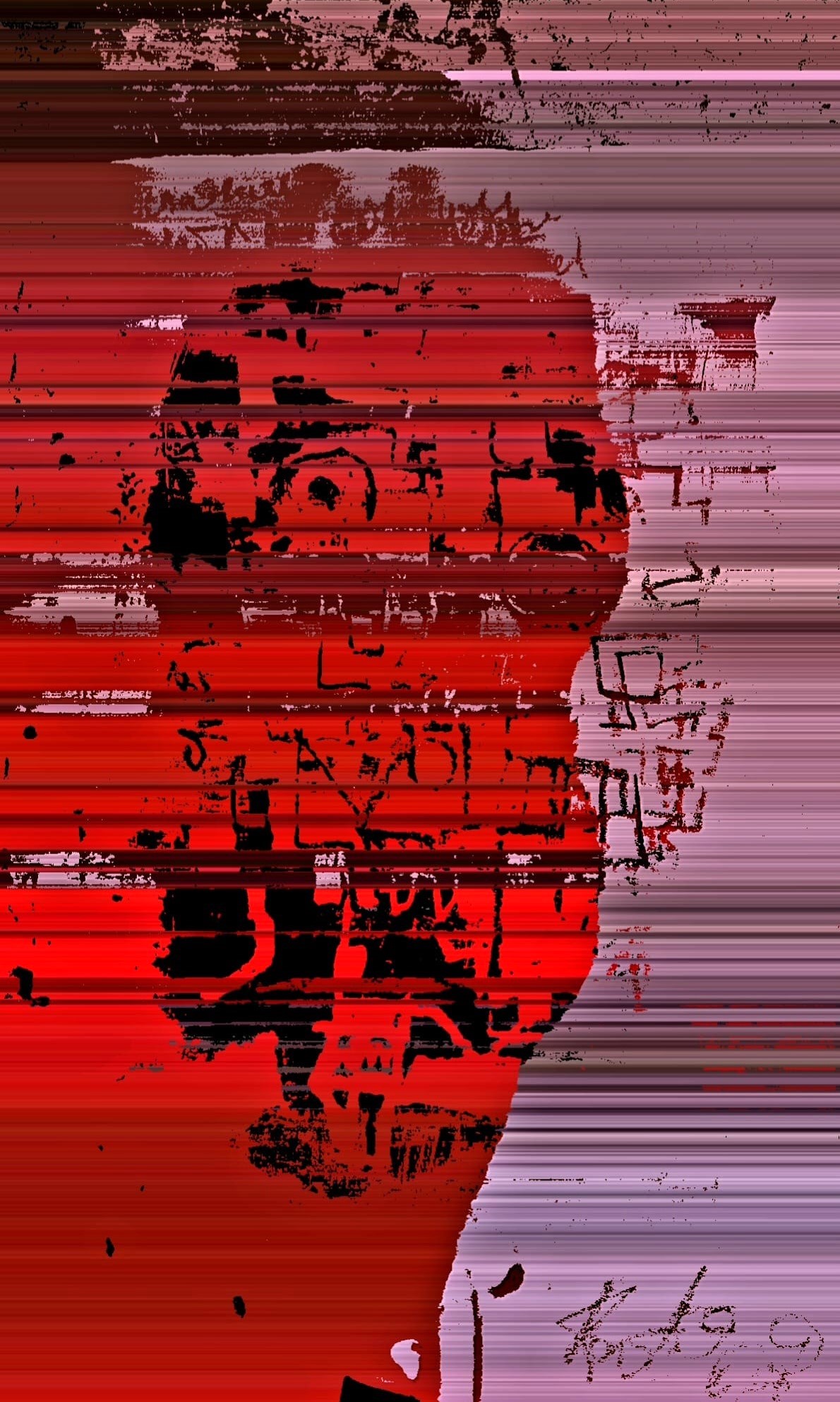


TYPO#1: Journal of Lettrism, Surrealist Semantics, & Constrained Design
Norman Conquest & farewell debut, Editors
Black Scat Books (2023)
148 pages paperback
6 X 9 inches
Color cover; b&w inside
Irregular
Review by De Villo Sloan
The first issue of TYPO published by Derek Pell’s Black Scat Books has arrived at an ideal moment in the evolution of avant garde and experimental art and writing. The monuments of the 20th century avant garde such as DaDa, Surrealism, Lettrism and Oulipo are enjoying healthy interest in the digital age, inspiring the creation of new genres. TYPO provides fresh insights and perspectives on these movements.
TYPO is not another contribution to the wax museum of official culture. The editors interweave selections from what poet Ron Silliman calls the post-avant with the historic avant garde and esoteric visual-verbal examples from earlier centuries. Included are new iterations and genres in the continuum such as asemics, digital collage, neo-concrete and visual poetry as well as typographical innovations rooted in Lettrism. Accessible and highly enjoyable prose complements the flow of images.
Contributors active in the current post-avant include Michael Betancourt, Luc Fierens, Amy Kurman, Karen Shaw, Doug Skinner and Cal Wenby. Their work melds seamlessly with pieces by/about avant garde heroes such as Isidore Isou, Raymond Queneau and Tristan Tzara. A strong Francophone vibe is readily apparent and, I believe, entirely appropriate. A tendency toward outsider art helps establish an eclectic spirit that defies rote categorization.
At the beginning of the issue, Norman Conquest (Derek Pell) writes, “Perhaps you were expecting a pretentious ‘mission statement,’ laced with lofty ideals and principled pronouncements like a sermon on the mount. That’s not for us. Instead, TYPO aims to be unpredictable, with each issue designed to surprise, amuse, titillate, and provoke.” This inaugural issue more than delivers on this promise.
One characteristic of the current post-avant that I notice – this is especially prevalent in European publications – is emotional flatness, a washed-out minimalism, a transformation of Roland Barthes’ “writing degree zero” into writing less than zero. Utterances and images lack both humor and irony mirroring empty circuits of algorithms rather than living. spontaneous, human interactions. TYPO is refreshing for its humanity alone.
The journal contains a healthy dose of humor, eroticism and cryptic ambiguity that makes it enjoyable to peruse many times. However, this interjection of humanity might confound the post-avant readers who can benefit from TYPO.
Discovering the humor and other complex emotional nuances found in DaDa, Surrealism and Lettrism, gives new life and meaning to these movements that had such a tremendous impact on the cultures of the 20th century.
One of my favorite contributions to TYPO is “Mnemonic Alphabets” by Doug Skinner that includes a series of circa 16th century image-text constructs that have an affinity to vispo and asemic glyph compositions of the present. The section “Asemic libertine” exhibits pages by Nicolas Restif de la Bretonne (1734-1806) whose prolific, eccentric publications reveal him to be a forerunner to the avant garde.
As a reviewer, I feel obligated to disclose I first discovered Derek Pell’s writing in underground literary magazines of the 1970s. These publications birthed and nurtured a truly alternative culture in the West. They flourished only briefly, silenced by the heavy-handed, willfully crude, Punk-inspired anti-art aesthetics of the 1980s zine explosion and the rise of the internet. Difficult to find today, the 1970s zines are treasures to explore. TYPO unfolds with the associative fluidity of the earlier underground texts. With its close attention to typography and space, TYPO is brilliantly designed, although unconventional to the core.
What gives the journal its singularity is that, in addition to being an authentic witness to the avant garde, Derek Pell is also a classic “Man of Letters” (Person of Letters). He enjoys wordplay, parody, satire and narrative, which are abundant in TYPO. In the Post-literate era, these elements can produce something akin to Brechtian alienation in some readers. Yet Pell’s approach contributes to a much-needed renewal of language, and we are invited to engage in the serious and joyful task of re-learning the pleasures of reading.
The avant garde that rose in the 19th century and became a vital force in the 20th century has now become a tradition with its own tropes and constraints. TYPO represents exactly what I believe is needed at this time: a bridge uniting the avant garde and the post-avant. I hope we can look forward to many more issues of TYPO.